
inZOI Painting Profit Test: Can Art Pay for My Home Improvements?
A first-person inZOI painting experiment: I painted 27 canvases from zero art skill to max, tracked every cost and sale, compared Build Mode against Pocket Market, and ended with 16,101 Mu net profit.
Quick Answer
Needs verificationI painted 27 canvases in inZOI from zero art skill to max level, tracking every cost and sale. I compared selling instantly in Build Mode against listing on Pocket Market and finished with 16,101 Mu net profit. Pocket Market added 7,100 Mu over base prices, but some listings took over 30 in-game hours to sell.
- Applies to
- Not recorded
- Last verified
- Pending
- Source
- Not recorded
On this page
Adaptation note: This article is written in the first person to preserve the voice of the original video creator, whose experiment it documents. The "I" throughout is the creator speaking, not the wiki author. The wiki has adapted their recorded playthrough into a readable guide. All figures come from this single test, in the game version the creator was playing, so treat them as results rather than fixed rules.
Quick answer: I painted 27 canvases in inZOI from zero art skill to max level, tracking every cost and sale. I compared selling instantly in Build Mode against listing on Pocket Market and finished with 16,101 Mu net profit. Pocket Market added 7,100 Mu over base prices, but some listings took over 30 in-game hours to sell.
Today I'm testing painting in inZOI to see just how profitable it can be. I started with a Zoi at zero art skill, worked my way through the whole skill progression, and tracked how much money I made along the way. By the end, I wanted to see how much of this house I could actually improve with the money I earned. So let's see how far we can get.
One thing up front: I wasn't trying to work out the exact odds of every painting quality at every skill level. Instead I painted at least one of each painting type as it became available, with some duplicates when I needed them to keep leveling, and I recorded enough to compare the two ways of selling at the end. So this is a hands-on profitability test, not a complete statistical study.
First Things First: The Easel and Canvas Costs
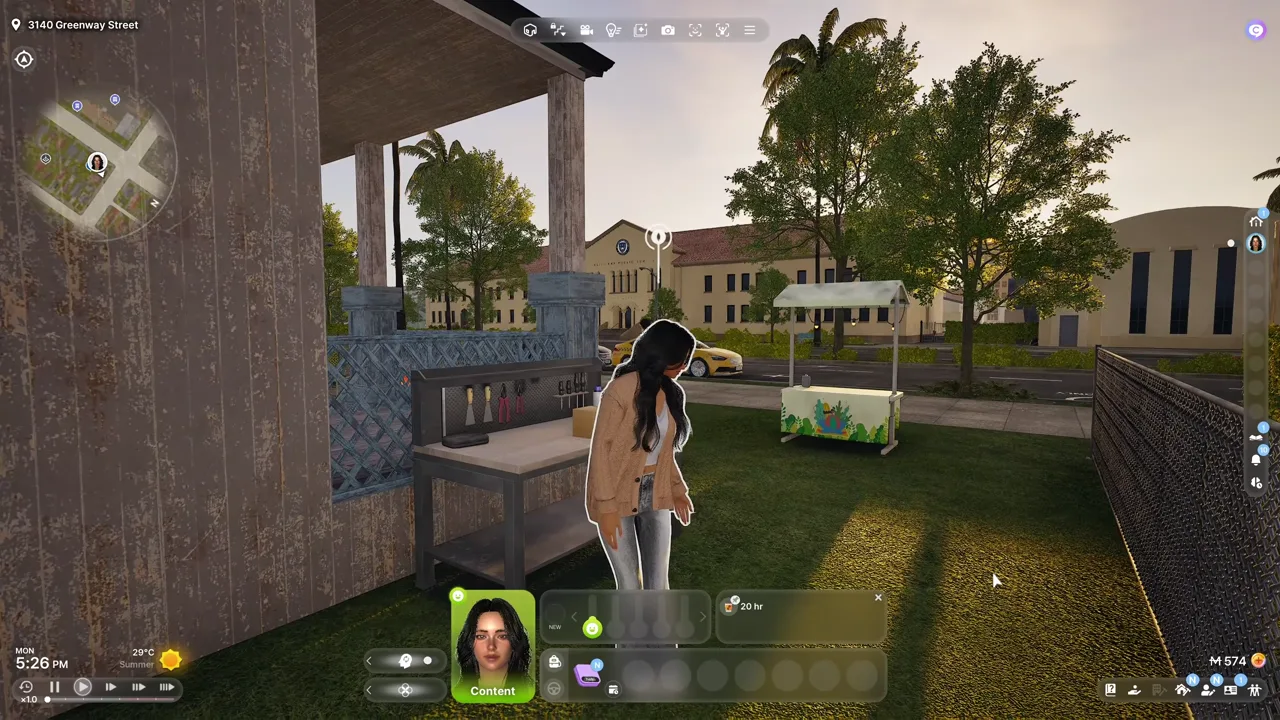
Before anything else, I needed an easel. I had a small amount of money saved from market stall sales and delivery jobs, so I could at least afford to get started.
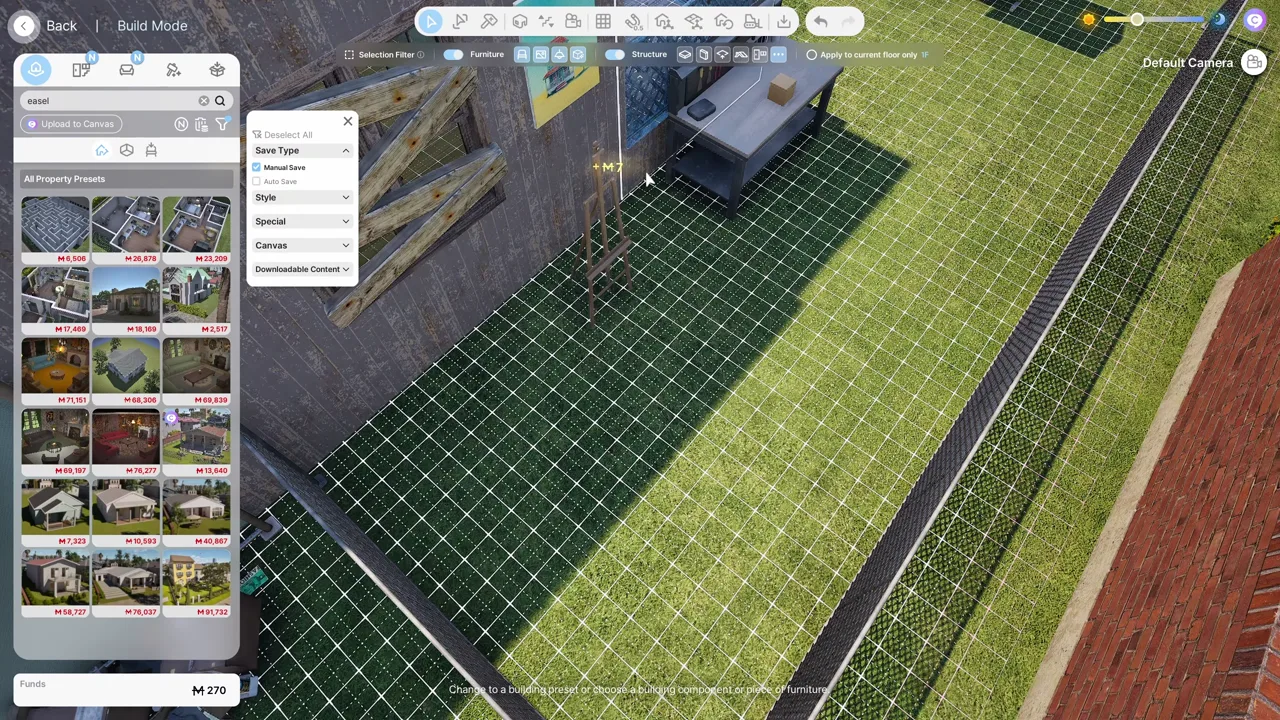
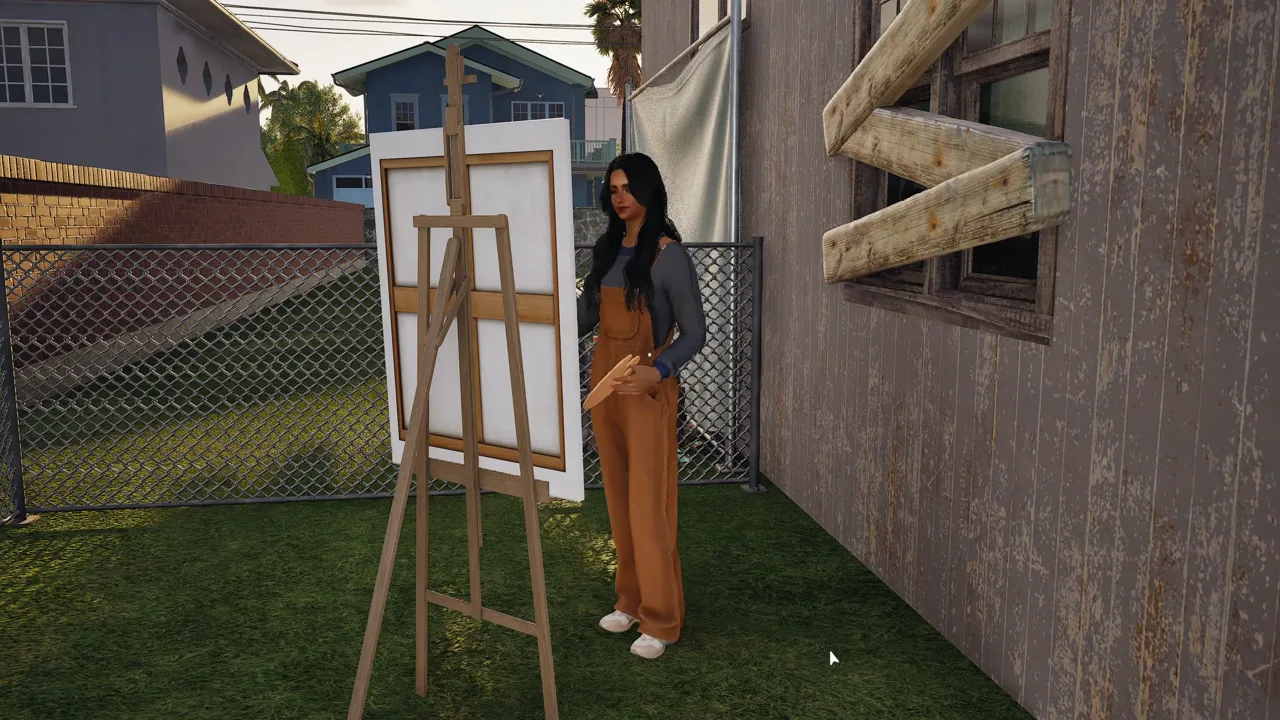
The easel cost 256 Mu, and on top of that there's a canvas cost every time you paint. At skill level zero there were three canvas sizes, all available right away, priced at 15, 30 and 50 Mu. So the initial cost of getting into painting works out to between 271 and 306 Mu, depending on which size you start with.
My first painting came out good quality, and the game said the price was 60 Mu. I decided to sell it on Pocket Market to see if I'd actually get the full 60, because honestly I didn't know how the system worked yet. That's when I noticed something: hovering over it showed the price was 60 Mu, but it was going for 82. That little gap is what the whole experiment ended up revolving around.
Source footage at approximately 18 seconds.
Two Ways to Sell: Build Mode vs Pocket Market
It turns out there are two ways to sell your paintings in inZOI. The sell price you see first is the base price, which you can get immediately by selling the painting through Build Mode. The other option is the Pocket Market app on your phone, where you can sell the things you make for a markup. You can also order other goods and services through there, and honestly, being able to just buy food on it rather than cook felt a little too much like real life.
I sold my first painting on Pocket Market overnight, and you can see how much you've earned through the budget app on your phone.
Source footage at approximately 1 minute 16 seconds.
The Pocket Market Catch: Waiting and Rejected Paintings
Pocket Market offers a higher selling price, but the catch is that once you list something, you have to wait for someone to actually buy it, so you don't see that money right away. My wait times ended up ranging from 30 minutes to over 30 in-game hours.
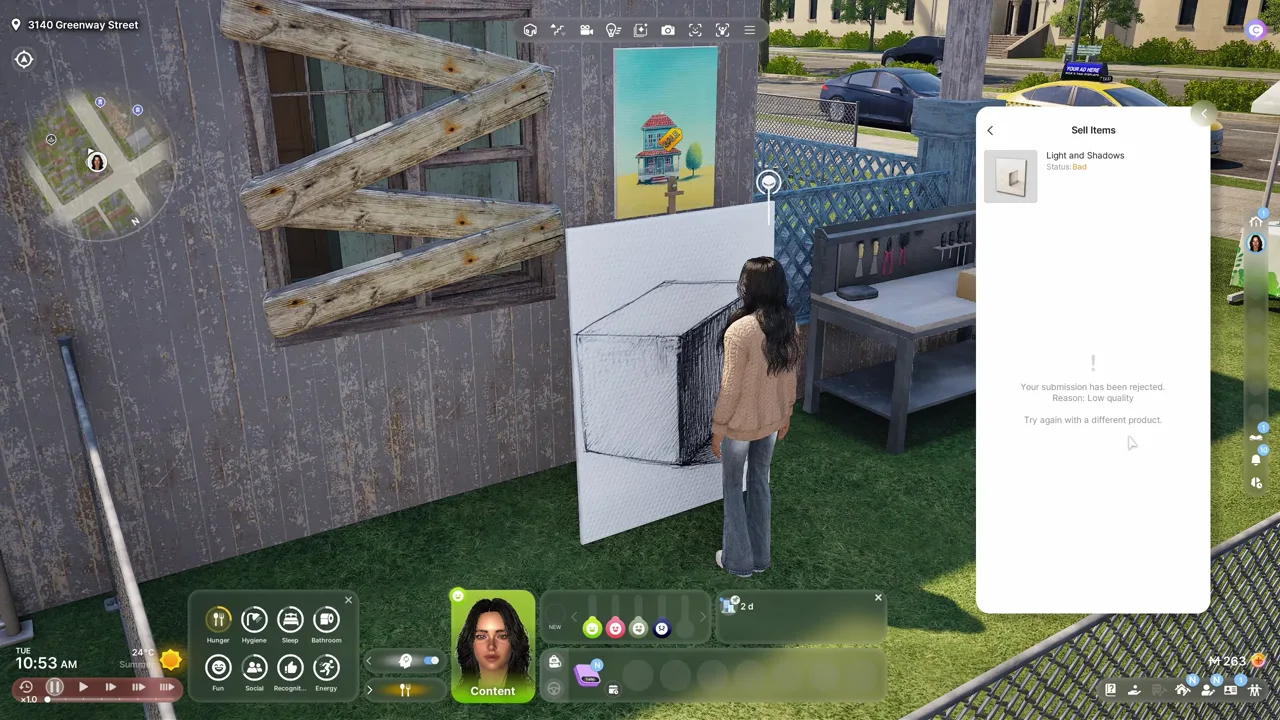
The other catch is that bad-quality paintings can't be sold through Pocket Market at all. The app just rejects them completely, so if you want to sell those you have to do it through Build Mode. For this test, I decided to throw the bad paintings away and count the cost of their canvases as a loss against our overall profits. For everything else I used Pocket Market, but I still recorded the base price of every painting so I could compare the two methods at the end.
Source footage at approximately 1 minute 40 seconds.
What the Art Skill Actually Changed
Going into this, I expected skill level to affect painting quality. I figured we'd start out making worse paintings more often, and gradually make better ones as our skill went up. That actually wasn't what happened. We kept getting bad-quality ones throughout. Womp, womp.
There are five possible quality levels you can get, and out of the 27 paintings I made, nine were bad quality. That's about a third, and they were spread pretty evenly across the whole skill progression. So leveling up the art skill didn't seem to make us any less likely to get a painting we had to throw away.
What the skill did seem to change was how quickly I could finish a painting. I noticed a speed increase around levels 4 and 8. So even though I wasn't getting better quality more consistently, I could finish paintings faster, and being able to complete more of them in less time is a genuinely useful perk.
I'll also mention that the developer said they're working on making crafted items that are made at a lower skill level actually look like they were made at a lower skill level. I'm looking forward to that, because this Zoi paints like someone who just started last night. For now, that's described as upcoming work, not something this test demonstrates.
Source footage at approximately 2 minutes 20 seconds.
Watching the Prices Climb
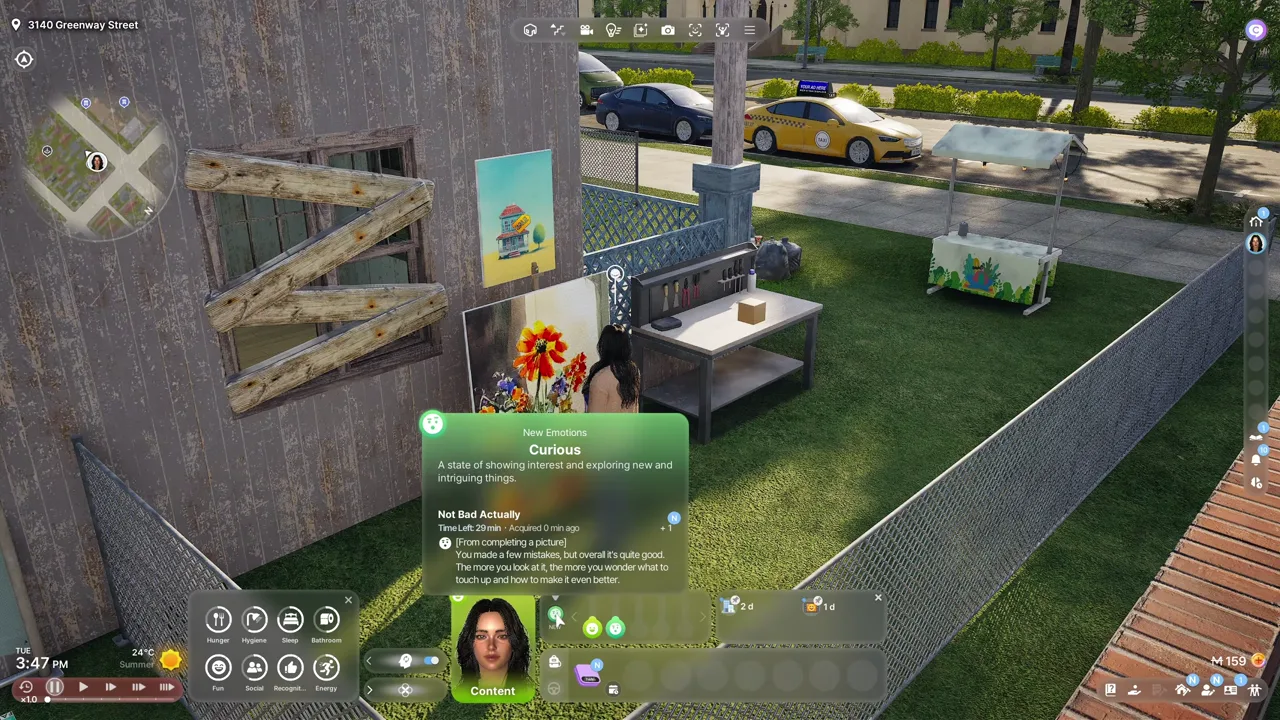
Once I settled into a routine, the numbers started getting interesting. One painting came out good at a base price of 175, the most profitable one so far, and I was curious to see what it would do on Pocket Market.
Then came the first excellent-quality one at a base price of 825, which already felt crazy, and about 1,200 on Pocket Market. That first big payout was enough that I bought my Zoi an actual bed, because she'd been sleeping on flattened cardboard boxes and waking up uncomfortable, and I wasn't sure whether being uncomfortable could affect her painting quality. Didn't seem worth the risk.
Around here I noticed the Pocket Market markup seemed to vary within a range depending on quality. In my testing, medium paintings got between an 18% and 27% markup, good ranged from 30 to 46%, excellent was 52 to 70%, and perfect landed at 82 to 87%. These are just my results, and I don't have enough paintings at each level to call these definite ranges, but the pattern was hard to miss: the better the painting, the better the market.
The big ones kept coming. My first perfect painting hit a base price around 3,200 and sold on Pocket Market for almost 6,000. At that point I figured it was pretty safe to say painting is a good moneymaker, so I planned to do roughly one of each type and then stop, because getting immediately rich kind of defeats the challenge. I said that, and then painted one worth around 37,000 anyway.
Source footage at approximately 3 minutes 36 seconds.
Maxing the Skill in About Three Days
After only a few in-game days of almost nothing but painting, I finally maxed out the art skill. It took about three days, which honestly was much faster than I expected. Looking back at how long each level took, most of the middle levels were around three hours of active painting each, and then the last few levels went by much quicker.
Worth keeping in mind: my Zoi spent nearly the entire experiment painting rather than balancing a normal schedule, so this is a fast path to maxing the skill that might feel different in a regular playthrough where she also has to work, eat, sleep and handle everything else.
Renovating the Kitchen While Paintings Sold
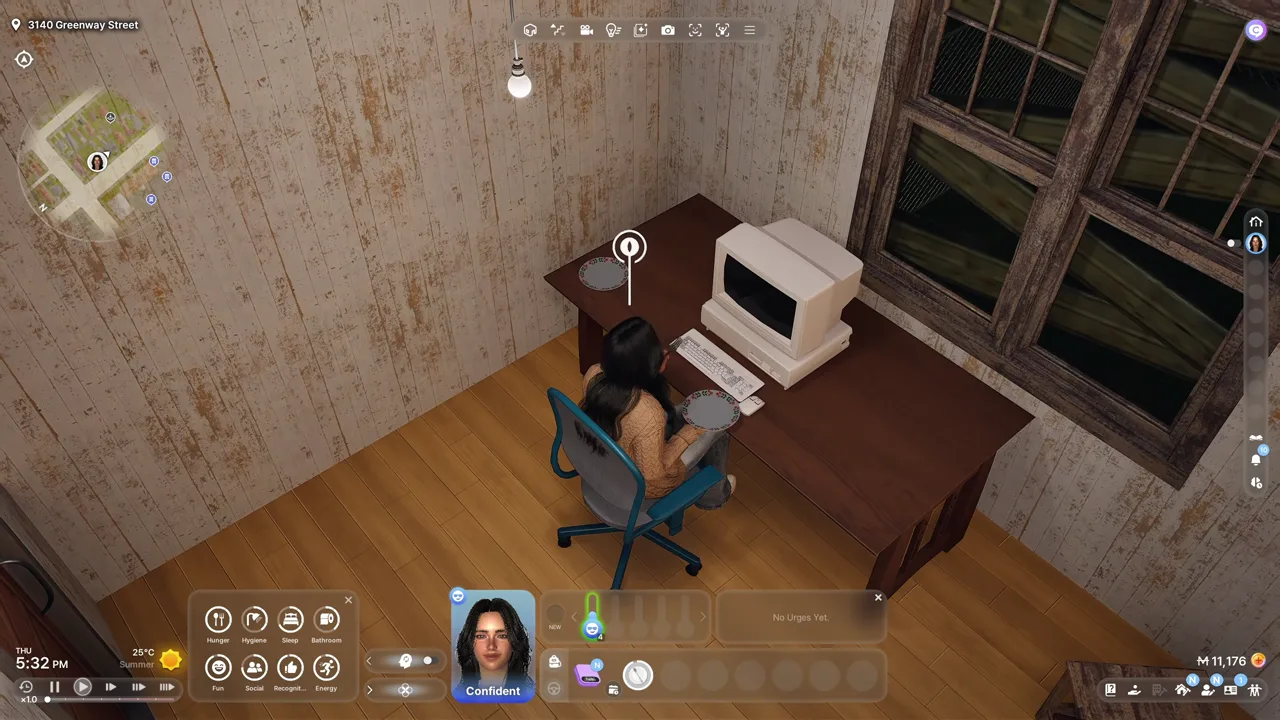
Rather than sitting around waiting for every Pocket Market listing to finish, I started spending the money that had already come in. I decided to begin with a kitchen upgrade, ordered my Zoi some food, and figured she deserved a steak while I was at it.
This is really the practical appeal of Pocket Market: the sales happen in the background, so I could keep taking care of her needs and working on the house while listed paintings waited for buyers. I didn't have a specific style in mind for the kitchen, so I just went with the flow and picked things I liked.
I actually had enough money to do more than just the kitchen, but I decided to stop there and save the rest for our next adventure. It's definitely not a full-house renovation, but considering all of it came from one painting experiment, I'm pretty happy with it.
Source footage at approximately 8 minutes 42 seconds.
The Final Numbers
After the renovation, I just had to kill time until the last few paintings sold so I could get my final data. I never once had to lower a price for anything to sell. The very last one, a perfect painting, sold 30 hours and 16 minutes after I listed it, and that was it, every single painting gone, with a good amount of money left even after the kitchen.
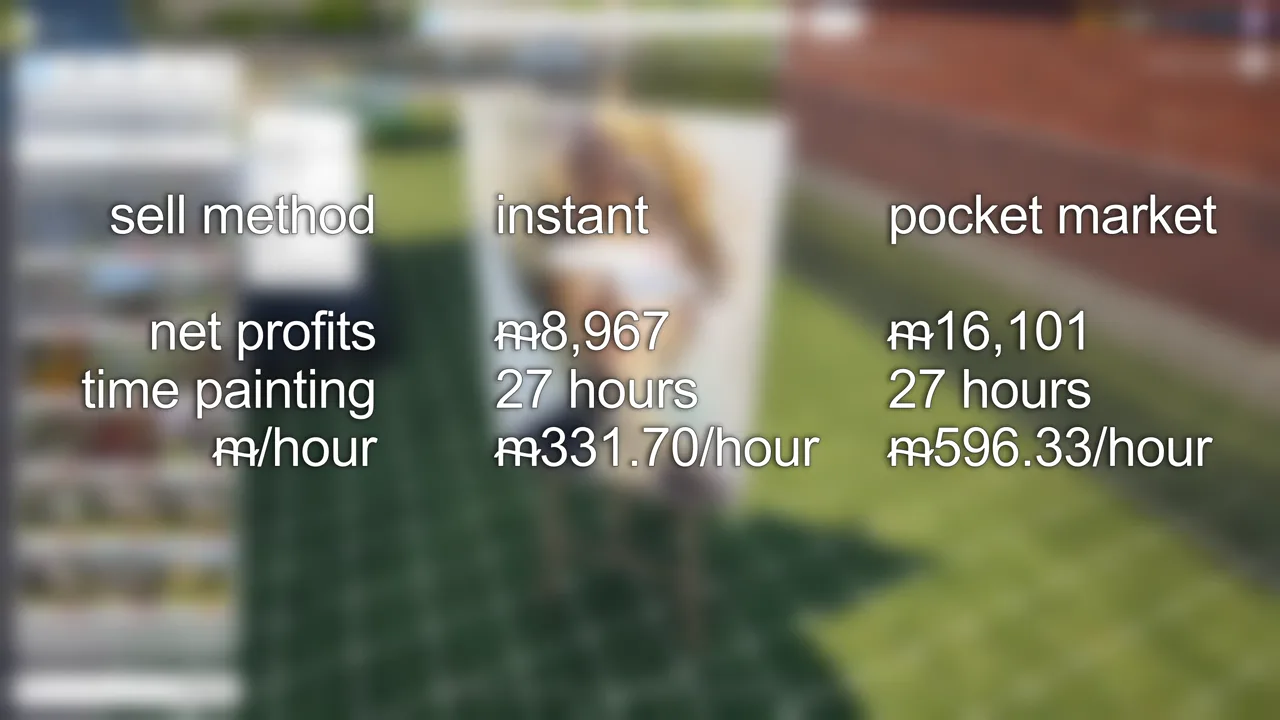
After tracking all of this in my increasingly ridiculous spreadsheet, I had enough to compare the two methods. If I'd sold everything at base price immediately through Build Mode, I'd have made 8,967 Mu net profit. That factors in the easel, all the canvases, and the revenue from the bad paintings as if I'd sold them instead of trashing them. I spent just over 27 in-game hours actually painting, which works out to a little under 332 Mu per active painting hour.
But because I actually sold everything except the bad ones through Pocket Market, I ended up with 16,101 Mu net profit, almost twice as much from the exact same amount of active painting time.
Source footage at approximately 14 minutes 27 seconds.
Build Mode vs Pocket Market: My Verdict
I added up all the time it took for paintings to sell, and it came to a combined 198.5 in-game hours of waiting. I don't think it's fair to count that as 198 hours of work, though, because you can be doing literally anything else while they're listed. So instead I looked at how much extra money that waiting actually earned me.
Pocket Market made an additional 7,100 Mu on top of the base prices over those 198.5 hours, which works out to an extra almost 36 Mu per hour of passive income while waiting.
So here's where I landed:
- If you need money right away, selling immediately through Build Mode is still a profitable option.
- If you can wait, you get substantially more from the same amount of painting by listing on Pocket Market, then letting it do its thing while you go do something else.
- Don't assume every painting can be listed, because bad-quality work gets rejected outright.
- Treat these exact prices as results from my test, not guaranteed values for every painting.
Source footage at approximately 15 minutes 29 seconds.
What This Experiment Does and Doesn't Prove
This was a documented playthrough, not a controlled study. From my test, I can say an easel costs 256 Mu; level-zero canvases cost 15, 30 and 50 Mu; paintings can be sold immediately in Build Mode or listed on Pocket Market for a markup; listings require waiting for a buyer; bad-quality paintings are rejected by Pocket Market; I made 27 paintings with nine bad-quality results; painting speed improved around levels 4 and 8; the skill maxed after roughly three in-game days of focused painting; my final net profit was 16,101 Mu; and Pocket Market added 7,100 Mu over base prices across 198.5 in-game hours of waiting.
What I can't tell you is the exact quality odds at each skill level, universal prices, guaranteed sale times, or whether you'll see the same results in a different save or game version. Read the figures as one creator's experiment, not a fixed economic formula.
Source Video
Watch the original inZOI painting-profit experiment. This article follows the creator's recorded test and uses the video as its factual boundary.